The cat used to sleep on top of my chest as I lay in bed at night. I'd go to bed and within a minute or two she'd pat into the room, like clockwork, jump up onto the bed, climb onto my chest, circle a few times, and go to sleep. It was our quality time together and I valued it.
But recently, she's stopped doing that. Now she sleeps way down at the foot of the bed, on the left side. Sometimes she still comes up to have a look at my chest, as if she's considering it, but then she always decides against it and goes to lie down at the foot of the bed.
If she could talk, she could explain what's going on, she could say, e.g., "It's been warmer recently, and I don't feel the need for your body heat," or "You've changed shampoos and I don't like the smell of the new one," or "I'm still angry about that time you nearly stepped on my tail," or whatever. But she's just a cat and she can't speak, so the change remains inexplicable and traumatic.
Sunday, January 22, 2012


Tuesday, January 3, 2012
Disaster Strikes!
So Tilo's been playing Monopoly Junior, off and on, for a few years now, and, whatever, it's a children's game, right? It's not very good; I don't recommend it.
Right, so we decided to get him a copy of regular old grown-up Monopoly for Christmas. It says "Ages 8+" on the box, but he's a highly intelligent, well-adjusted seven year old--or anyway, he knows to cry when he doesn't get his way, so that all seems fine.
BUT--and this was completely my fault--when I went to the store to pick the game up a few weeks ago, I just assumed that the box with Monopoly written on it would be, you know, Monopoly, and not something else. So imagine the horror and disgust I felt when, upon opening it up a couple of days ago*, we found this: 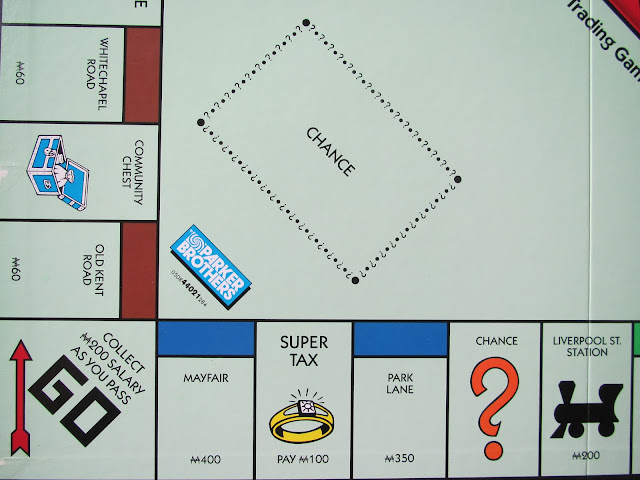

That's right: it's the UK version! Now I think I'm a pretty cosmopolitan guy, but this rankles for several reasons.
- This is Australia! If they're going to play on a non-standard board, why not Sydney or Melbourne or something? Bowing down before the imperial capital is very 1950s.
- If they're going to do London, why aren't we using pounds? The instructions still refer to the currency as "dollars," but they use this weird
Msymbol instead of $. What the hell? - Come on! Monopoly has got to be the quintessential American board game. It's the apotheosis of unrestrained robber-baron style capitalism--and not some kind of namby-pamby-Smithian-hidden-hand-of-the-market-spontaneously-maximizes-the-public-good capitalism either--no no no! Monopoly is a game of real estate speculation, literal rent seeking. You're supposed to run your competition out of business, drive up prices as high as possible, and impoverish your fellow citizens. You win when the other players lose everything! This is a game inspired by Andrew Carnegie and J. P. Morgan. It would have made Professor of Moral Philosophy Adam Smith physically ill. It belongs in Atlantic City, not London.
* We were in Bali for Christmas, just got back a couple of days ago. Santa filled Tilo's stocking in the hotel, but he had to wait to get home to open his presents.
Highbrow Allusions in Pynchon
Check this out:
"Quickly, the field-glasses....Now, what in blazes have we here?" The [airship] in the distance was distinguished by an envelope with the onion-like shape--and nearly the dimensions too--of a dome of an Eastern Orthodox church, against whose brilliant red surface was represented, in black, the Romanoff crest, and above it, in gold Cyrillic lettering, the legend BOL'SHAIA IGRA, or "The Great Game." It was readily recognized by all as the flagship of Randolph's mysterious Russian counterpart--and, far too often, nemesis--Captain Igor Padzhitnoff, with whom previous "run-ins" (see particularly The Chums of Chance and the Ice Pirates, The Chums of Chance Nearly Crash into the Kremlin) evoked in the boys lively though anxious memories.
"What's up with Padzhy, I wonder?" murmured Randolph. "They're sure closing awfully rapidly."
The parallel organization at Saint Petersburg, known as the Tovarishchi Slutchainyi, was notorious for promoting wherever in the world they chose a program of mischief, much of its motivation opaque to the boys. Padzhitnoff's own specialty being to arrange for bricks and masonry, always in the four-block fragments which had become his "signature," to fall on and damage targets designated by his superiors. This lethal debris was generally harvested from the load-bearing walls of previous targets of opportunity.
--Thomas Pynchon, Against the Day, 2006. Pages 137-38 of Vinatge version.
Okay: Russian dude dropping "bricks and masonry" from airship in signature "four-block fragments." That's a Tetris reference, right? Right?
Monday, January 2, 2012


Sunday, December 25, 2011

Friday, December 23, 2011
My Joke about Heidegger
I'm pretty sure I thought this up on my own. I don't think I heard it anywhere:
Q Why is Martin Heidegger the Bill Clinton of Continental philosophy?
A Because they both want to know what the meaning of "is" is.
Get it? Get it?
(I did a couple of web searches and it turns out several people have already thought up variations on this joke. Damn it! Not fair! I didn't even know who Heidegger was back when that whole Lewinsky thing was happening!)
Friday, December 16, 2011
Just Punchlines
- "Now all we need is a really big mango!"
- A bagel wearing a sombrero.
- "I'm sorry, I thought this was a two-person horse costume."
- Just one, to turn off the lights.
- A dolphin, a lawyer, and a ham sandwich.
- "Sorry lady, I don't do windows."
- You give him a hot glue gun and a copy of Vogue magazine.
- "So if you're the accountant, where's the gastroenterologist?"
- A chocolate croissant.
- Then the baker says: "But I thought you wanted a really big panini!"
- Bed, bath, and beyond.
- Tragically, the ticket-taker's body was never found.
- "No thanks, I've already had breakfast."
- So then the goat says: "Meow".
- "I already know the monk and the astronaut, but who the hell are you?"
- Just add water.
- The food is so-so, but the ambience is to die for.
- "That's not chicken!"
- "Please stop pooping on my iguana."
- "Lady, I don't know what you're talking about. I just came by to do the windows!"
Mechanical and Organic Solidarity in Durkheim
 |
| An adorable puppy. |
Okay, so if I understand Durkheim correctly, the transition from mechanical solidarity to organic solidarity is basically a function of the division of labor. You start out with an almost implausibly primitive subsistence society with no social differentiation from person to person. Everybody does more or less the same jobs as everybody else, so they're interchangeable--hence, "mechanical". In this case, solidarity derives from similarity in outlook and experience.
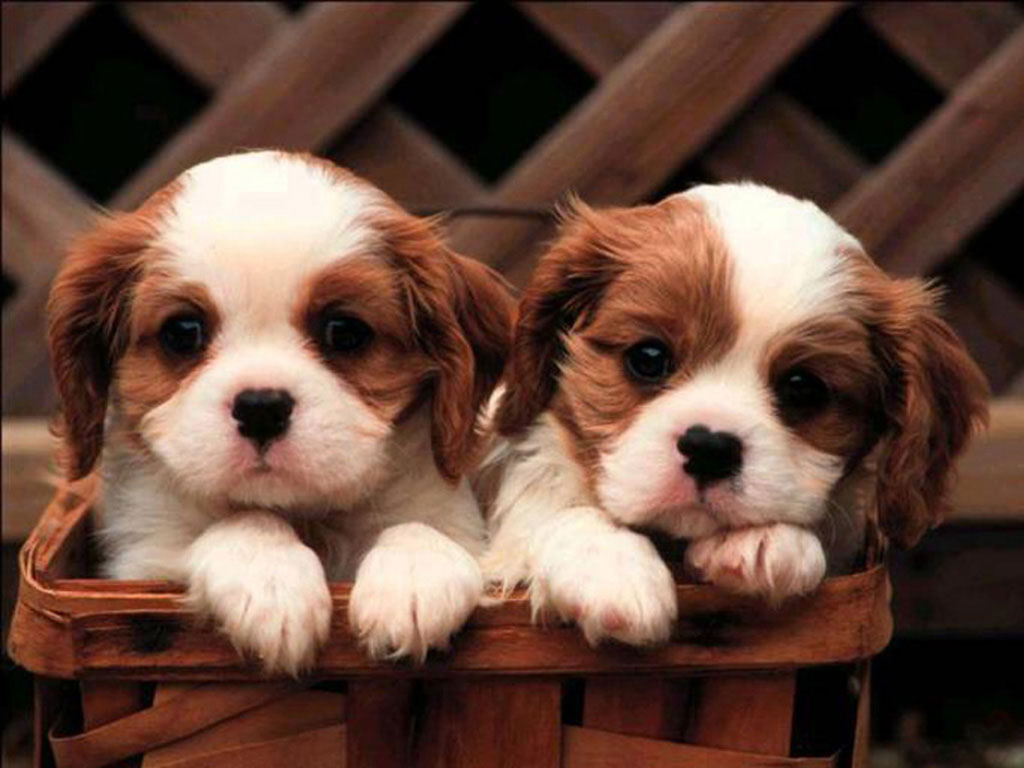 |
| These two puppies are in a basket. |
 |
| He's probably all like: "Hey! How do I get down from here?" |
 |
| Have a purr-fect Christmas! |
Sunday, December 11, 2011
The Transcendence of Banana Bread


 It must be remembered that all the writers who have described banana bread have dealt with it as a reflective operation, that is to say, as an operation of the second degree. Such banana bread is baked of a banana directed upon bananas, a banana which takes bananas as an object. Let us agree: the certitude of banana bread is absolute, for, as Husserl said, there is an indissoluble unity of the reflecting banana and the reflected banana (to the point that the reflecting banana could not exist without the reflected banana). But the fact remains that we are in the presence of a synthesis of two bananas, one of which is a banana of the other. Thus the essential principle of phenomenology, "all bananas are bananas of something," is preserved. Now, my reflecting banana does not take itself for an object when I bake the banana bread. What it affirms concerns the reflected banana. Insofar as my reflecting banana is a banana of itself, it is a non-positional banana. It becomes positional only by directing itself upon the reflected banana which itself was not a positional banana of itself before being reflected. Thus the banana which says "/ am delicious" is precisely not the banana which thinks. Or rather it is not its own banana which it posits by this thetic act. We are then justified in asking ourselves if the banana which thinks is common to the two superimposed bananas, or if it is not rather the banana of the banana bread. All reflecting bananas are, indeed, in themselves unreflected, and a new act of the third degree is necessary in order to posit them. Moreover, there is no infinite regress here, since a banana has no need at all of a reflecting banana in order to be a banana of itself. It simply does not posit itself as an object.
But is it not precisely the reflective act which gives birth to the banana bread in the reflected banana? Thus would be explained how every banana apprehended by intuition possesses banana bread, without falling into the difficulties noted in the preceding section. Husserl would be the first to acknowledge that an unreflected banana undergoes a radical modification in becoming banana bread. But need one confine this modification to a loss of "naïveté"? Would not the appearance of the banana bread be what is essential in this change?

Note: the recipe called for 2 tablespoons of unsalted butter, but the individual consciousness is characterized by radical freedom; I substituted margarine.
Saturday, December 10, 2011
Explaining the European Debt Crisis with Reference to the Back to the Future Trilogy (UPDATED)
People often say to me: "Bertie, I find most explanations of the European debt crisis unnecessarily technical and confusing. Can you explain it to me in clear, simple terms, ideally with reference to the Back to the Future movies?"
Well, no, asshole, I can't. You find explanations of the European debt crisis confusing because it is a massive, complex, legitimately confusing issue. If you genuinely need to understand it, you should get to work studying modern finance and the structures of Euro-governance rather than sitting around whining and hoping for some absurd pop culture short-cut.
UPDATE:
Okay, okay! If you insist! Do you remember in Back to the Future part one, where Marty McFly has accidentally travelled back in time and has to play cupid to his father and mother in order to insure his own future existence? Well, imagine that instead of a socially awkward 1950s American teenager, Marty McFly's father is a medium-sized Mediterranean nation with a heavy debt burden but also a primary budget surplus. Okay, and instead of a big-haired high school beauty queen, Marty's mother is the healthy 3-4% growth rate that George McFly needs to meet the interest payments and push down his debt. Right? So of course, Marty has to get George and Lorraine together. But, now imagine that European Central Bank President Biff Tannen insists on setting a monetary policy better suited to Frankfurt than to Rome, okay, and then George McFly's 10-year bond yields shoot up above 7% and he loses access to the financial markets at his high school senior prom! I mean, disaster, right? Marty starts to disappear! So he and his eccentric wild-eyed scientist friend, the European Financial Stability Facility, have to hold a series of increasingly desperate intergovernmental summits with a black American rhythm and blues band wherein they restore Lorraine's confidence in George by enacting strict new Europe-wide debt rules and inventing rock-and-roll. Meanwhile, when Biff attempts to force a credit default swap on Lorraine, George McFly discovers his inner strength by replacing Prime Minister Silvio Berlusconi with former European Union Competition Commissioner Mario Monti.
Okay, so everything seems fine, right? But, but, but, the painful austerity measures forced on George McFly and other south European countries are bound to drive up unemployment and send them further into recession, making it even more difficult for them to pay off their debts. And, because they lost the ability to set independent monetary policy when, uh, future Biff Tannen went back in time and gave a copy of the Maastricht Treaty to his past self, they no longer have the capacity to inflate their way out of debt. Right? Okay, so now Marty and the EFSF are back in 1885 for some reason, and they're stuck, because the European Commission can't reach a speed of 88 mph without the unanimous consent of all 27 members and local outlaw gunslinger Mario "Mad Dog" Draghi has ruled out issuing Eurobonds to back sovereign debt. Okay? Does that make sense now?
Friday, December 9, 2011
On Parenting
Christine and I sometimes worry that we're bad parents, but really, what if we're actually good parents? Wouldn't that be even worse?
I mean, if we're bad parents, that's basically a private tragedy. Tilo will grow up maladjusted and antisocial. He'll maybe develop substance abuse problems, or be tried as an adult for setting a tram stop on fire. We'll face the disapproval of our peers. Whatever, right? But at least we'll have the solace of knowing that we're pretty much alone, that other parents raised their children competently. We'll be living in a society comprised of emotionally stable, public-spirited citizens, the kind of society that could reasonably incarcerate Tilo as a menace. I mean, he is a menace, right? Have you seen his room?
But what if, relatively speaking, we're the good ones? What if most other parents are even worse than we are? Honestly, from what I see day to day, I don't think that's so far-fetched. And then it doesn't really matter how responsible and well-adjusted Tilo is, right? Then the world is completely fucked.
Scary thoughts.
Tuesday, December 6, 2011
Puppy Factories
I've seen some billboards and T-shirts like this recently, and best of luck to them, but I think somebody in the RSPCA's PR department really screwed this one up. Here's the thing: "puppy factories" just sounds completely adorable. I can picture them, you know, running around in their little yellow hardhats, drooling all over the conveyor belts, driving little forklifts loaded up with chew toys and milkbones, maybe getting knocked around by huge oversized gears a la Modern Times. Seriously, who wouldn't want to visit a puppy factory? And these sourpusses in the RSPCA want to close them down?
Big PR mistake, IMHO.

Big PR mistake, IMHO.

Subscribe to:
Posts (Atom)